Ear, nose, and throat problems can range from relatively common complaints such as sinusitis and nasal allergies to hearing disorders, vertigo, sleep apnea, or neck lumps that require further examination.
For Indonesian patients seeking ENT Penang services, the choice of doctor should be adjusted according to the type of complaint. A doctor who frequently handles sinus and nasal problems may have a different focus from a doctor who handles hearing disorders, ear surgery, or head and neck diseases.
The examinations and treatments are also different. Some conditions can be assessed through clinical examination and treated with medication, while other conditions may require endoscopy, hearing tests, CT, MRI, or specific procedures.
This guide discusses conditions treated by ENT doctors in Penang, the types of examinations and procedures that can be performed, how to choose a doctor and hospital, and preparations for Indonesian patients before consultation.
What Is ENT?
ENT is an abbreviation of Ear, Nose, and Throat. In the medical field, this specialization is known as otorhinolaryngology or THT which handles diseases of the ear, nose, throat, and related head and neck structures.
Its scope is quite broad. ENT doctors can handle hearing disorders and ear infections, sinus and nasal problems, tonsils, voice disorders, and even some tumors or lumps on the head and neck.
Because the scope is broad, some doctors have specific clinical focuses. Some handle more nose and sinus issues, ear and hearing disorders, voice disorders, sleep apnea, or head and neck surgery. Therefore, when looking for an ENT Penang doctor, it is best to start from the complaint or diagnosis you want to address, not just look for an ENT doctor in general.
What Conditions Are Treated by ENT Doctors?
Many ENT conditions have similar symptoms. Nasal congestion, for example, can be related to allergies, sinusitis, polyps, or structural nasal problems. Therefore, examination is necessary before determining therapy.
Sinusitis
Sinusitis is inflammation of the sinuses that can cause nasal congestion, nasal discharge, pressure or pain in the face, and decreased ability to smell. Acute and chronic sinusitis have different approaches. Some acute cases can improve with medical therapy, while chronic sinusitis requires further evaluation to see if there is prolonged inflammation, polyps, or anatomical factors.
If symptoms continue to recur or do not improve with therapy, the doctor may consider nasal endoscopy or sinus CT to understand the condition more clearly. Surgery is not automatically required just because someone has sinusitis.
Rhinitis and Nasal Allergies
Rhinitis can cause sneezing, runny nose, itching, and nasal congestion. One cause is allergies to triggers such as dust mites, pollen, or other environmental factors. Management may include avoiding triggers, nasal sprays, antihistamines, or other therapies based on the condition.
In certain patients, allergy testing can help if the results are expected to affect the management of the condition. However, not all patients with nasal congestion need allergy tests.
Tonsils and Adenoids
Tonsils and adenoids are lymphoid tissue located in the throat area and back of the nose. Enlargement or recurrent infections can cause sore throat, swallowing difficulties, snoring, or breathing disturbances during sleep in certain patients.
The doctor will consider the frequency of infections, size of tonsils or adenoids, their impact on breathing and sleep, and the patient's condition before determining whether medical therapy or surgery should be considered.
Hearing Disorders
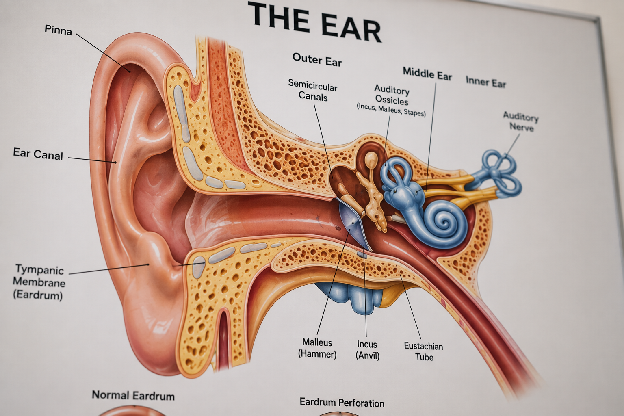
Hearing disorders can occur due to problems in the outer ear, middle ear, inner ear, or auditory nerve pathways. Causes can range from earwax and infections to disorders of the eardrum, hearing bones, or inner ear.
Because the causes differ, hearing examinations such as audiometry can help determine the type and level of disorder before the doctor recommends therapy. Hearing loss that appears suddenly, especially in one ear, should receive medical evaluation quickly.
Vertigo
Vertigo is a sensation as if oneself or the environment is spinning. The cause does not always originate from the ear, but the balance system in the inner ear is one possibility.
The doctor can evaluate the pattern of symptoms, triggers, duration, hearing disorders, tinnitus, and other neurological symptoms. Some causes of vertigo can be treated through maneuvers or specific therapies, while other conditions require additional examination or referral to the neurology field. Vertigo accompanied by weakness on one side of the body, speech disturbances, loss of consciousness, or sudden neurological symptoms requires immediate assistance.
Tinnitus
Tinnitus is the sensation of hearing sounds such as ringing, buzzing, or other sounds without an external source. This condition can be related to hearing disorders, loud noise exposure, ear problems, certain medications, or other factors.
Evaluation may involve ear examination and hearing tests. Tinnitus that occurs only on one side, pulsates following the pulse, or is accompanied by certain hearing disorders may require further evaluation.
Sleep Apnea and Snoring
Snoring does not always mean someone has obstructive sleep apnea, but it can be one of the symptoms. In sleep apnea, the airway repeatedly narrows or closes during sleep, causing breathing disruption. Patients may experience poor sleep quality, daytime sleepiness, morning headaches, or other symptoms.
An ENT doctor can evaluate nasal and throat structures that may contribute to obstruction. However, diagnosis of sleep apnea may require a sleep study and sometimes involves multiple medical fields.
Nasal Polyps and Deviated Septum
Nasal polyps are tissue growths related to inflammation and can cause nasal congestion or impaired sense of smell. Meanwhile, a deviated septum occurs when the partition between the two sides of the nose is not in an ideal position and in some patients can affect airflow.
Not all polyps or septal deviations require surgery. The doctor will consider the severity of symptoms, response to medical therapy, and examination findings before recommending a procedure.
Neck Lumps
Lumps in the neck can have many causes, ranging from enlarged lymph nodes due to infection to disorders of the salivary glands, thyroid, or certain tumors. Lumps that persist, enlarge, feel hard, or are accompanied by symptoms such as difficulty swallowing, prolonged hoarseness, or unexplained weight loss should be evaluated. Examination may involve ultrasound, CT, MRI, or tissue sampling depending on the characteristics of the lump.
Voice Disorders
Hoarseness can occur due to infection, excessive voice use, reflux, vocal cord problems, or other conditions. If voice changes last quite long or occur without a clear cause, an ENT doctor can examine the larynx and vocal cords using endoscopy. Early evaluation is also important in patients with certain risk factors or additional symptoms such as difficulty swallowing and neck lumps.
Examinations That Can Be Performed for ENT Problems
The type of examination is chosen based on the complaint. Not all patients require CT, MRI, endoscopy, or allergy tests all at once.
Endoscopy of the Ear, Nose, and Throat
Endoscopy uses an instrument with a camera to view structures that are difficult to examine directly. For nasal and sinus complaints, endoscopy can help visualize inflammation, polyps, fluid, or anatomical problems. For voice and throat disorders, the examination can be used to evaluate the larynx and vocal cords. The procedure is usually performed based on clinical need and is not automatically required at every ENT consultation.
Audiometry
Audiometry is used to measure hearing ability at various frequencies and helps determine the type and degree of hearing loss. The examination can be combined with other ear tests if the doctor needs information about middle ear function or other parts of the auditory system. The results help determine whether the patient needs medical therapy, hearing aids, additional examinations, or other options.
CT and MRI
CT can provide detailed images of bone structure and certain anatomy. In ENT, CT often has a role in evaluating the sinuses, ears, or head and neck structures based on indication. MRI is better for some soft tissues and certain nerve structures and does not use ionizing radiation. The two are not interchangeable for all conditions. The doctor will choose the examination based on the clinical question to be answered.
Allergy Testing
Allergy tests may be considered in patients with symptoms suggestive of allergic rhinitis or certain other conditions. The examination can help identify triggers, but results need to be interpreted together with symptom history. A positive result to an allergen does not always mean that substance is the main cause of all the patient's complaints. Therefore, allergy testing should be done when the results can indeed help determine management.
ENT Procedures That Can Be Considered
Many ENT conditions can be managed with medication or conservative therapy. Surgery is usually considered when there is a clear indication or previous therapy has not provided adequate results.
Sinus Surgery
Endoscopic sinus surgery may be considered in some patients with chronic sinusitis or certain sinus conditions. The procedure is performed through the nose using an endoscope so the doctor can open or repair sinus drainage pathways without making large external incisions.
However, surgery is not a replacement for all medical therapy. Underlying inflammatory or allergic conditions may still require management after surgery.
Septoplasty
Septoplasty is performed to correct a deviated nasal septum when the condition causes significant problems. Its main purpose is to improve airflow function, not to change the shape of the nose for cosmetic purposes.
The doctor needs to ensure that the septal deviation indeed contributes to the complaint before the procedure is recommended.
Tonsillectomy and Adenoid Surgery
Tonsillectomy is a procedure to remove the tonsils. In certain patients, surgery may be considered due to recurrent infections, enlargement causing breathing problems, or other conditions.
Adenoids can also be removed in certain conditions, especially if they cause breathing problems or ear problems in children. The decision for surgery considers the frequency and severity of symptoms, not just the size of the tonsils or adenoids.
Ear Tubes
Small tubes can be inserted into the eardrum to help ventilate the middle ear in certain conditions, especially when there is persistent fluid or recurrent middle ear problems.
This procedure is more often discussed in the context of children, but the indications still depend on individual conditions. The doctor will consider the duration of the problem, hearing impairment, frequency of infections, and other factors before recommending intervention.
Cochlear Implant
A cochlear implant is an electronic device that can help some patients with severe to profound hearing loss who meet the criteria. This device differs from regular hearing aids. Candidates require comprehensive hearing evaluation to determine whether there is potential benefit. The process also does not stop at surgery. Patients require device activation, programming, and auditory rehabilitation after the procedure.
Head and Neck Surgery
ENT doctors with a focus on head and neck surgery can manage tumors or other conditions in the head and neck, including the throat, larynx, salivary glands, and certain other structures.
If cancer is suspected, evaluation may involve imaging, biopsy, pathology, and doctors from several fields. Treatment may then include surgery, radiotherapy, systemic therapy, or combinations based on diagnosis and stage.
How to Choose an ENT Doctor in Penang?
Selecting an ENT Penang doctor should begin with the type of complaint. Patients with chronic sinusitis or polyps can look for doctors with a focus on rhinology and sinus surgery. For hearing disorders or complex ear diseases, experience in otology or neurotology may be more relevant.
Patients with voice disorders may need a doctor with a focus on the larynx, while lumps or tumors in the head and neck area may require a doctor who manages head and neck surgery.
When comparing doctors, consider:
- specialization and clinical areas
- types of conditions commonly managed
- procedures performed
- hospital where they practice
- available diagnostic facilities
- language of communication
- follow-up requirements
Do not choose based solely on popularity or the number of procedures offered. The appropriate doctor is one with experience and facilities relevant to the patient's problem.
Read also: ENT Singapore: Dokter THT dan Pengobatan Telinga, Hidung, Tenggorokan
Hospitals with ENT Services in Penang
Penang has several multispecialty hospitals that provide ENT services. In the Medifly context, patients should choose from the doctors and facilities available in the network at the time of search. Rather than ranking hospitals, compare facilities based on the available ENT doctors and the examinations or procedures needed.
If a patient requires hearing evaluation, for example, check whether the facility has audiology services. For sinus surgery, ensure there are appropriate endoscopy and surgical facilities. Meanwhile, complex procedures such as cochlear implant or head and neck surgery require different teams and supporting facilities.
For Indonesian patients, international patient services, language of communication, hospital location, and the process of obtaining results can also be practical considerations. Availability of doctors and procedures may change. Therefore, it is advisable to confirm directly before making the trip to Penang.
What Are the Costs of ENT Consultation and Treatment in Penang?
ENT treatment costs differ based on the type of complaint and examinations needed. Doctor consultations have a different fee structure from endoscopy, audiometry, CT, MRI, allergy tests, or surgical procedures.
If a patient requires intervention, costs may include:
- doctor consultation
- diagnostic examinations
- endoscopy
- imaging
- surgeon's fee
- anaesthesia
- operating room
- medical devices if required
- hospitalization
- medications
- pathology if tissue sampling is performed
- post-intervention follow-up
Therefore, patients should request an estimate based on diagnosis and examination plan, rather than just asking for "ENT doctor cost in Penang". If you already have sinus CT, MRI, hearing tests, or other examination results from Indonesia, submit them first so the hospital can understand the patient's needs more clearly.
How Does Medifly Help ENT Penang Patients?
Medifly helps Indonesian patients explore ENT doctors and facilities in its network based on complaints and treatment needs. Patients can start by sending a summary of symptoms, diagnosis if already available, and previous examination results. For sinus disorders, for example, an available CT can help provide an initial picture. For hearing disorders, previous audiometry results can also be prepared.
Medifly can help:
- explore ENT doctors in the network
- prepare and send medical records
- arrange appointments
- assist with second opinion process
- request initial cost information
- assist communication with hospitals
- coordinate medical travel
- assist with follow-up requirements
Medifly assists with the search and coordination process. Diagnosis and decisions regarding medications, examinations, or surgery remain with the doctor.
Conclusion
ENT Penang services cover various conditions of the ear, nose, throat, and head and neck. Complaints such as sinusitis, nasal allergies, hearing disorders, vertigo, tinnitus, voice disorders, to neck lumps require different approaches.
Not all patients require CT, MRI, or surgery. Examinations should be selected based on symptoms and doctor's findings, while procedures are considered when there are clear indications.
For Indonesian patients, choosing a doctor based on clinical area, preparing previous examination results, and confirming required facilities before departure can make the consultation process more focused.
Need Help Finding an ENT Doctor in Penang?
Medifly can help you navigate in-network ENT doctors and facilities, prepare medical records, arrange consultations, and coordinate medical travel to Penang.
References: