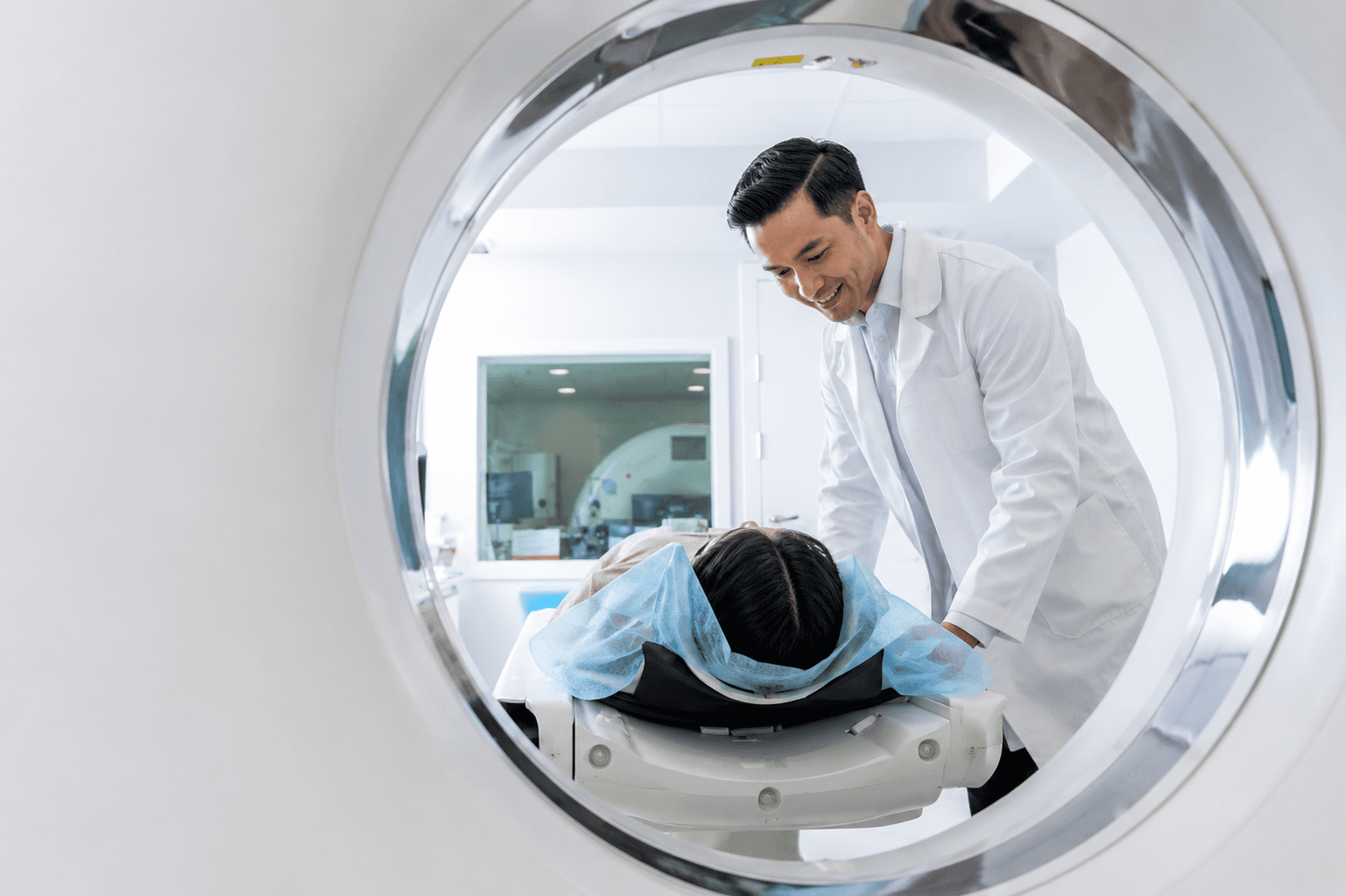
Radiological examinations help doctors visualise specific structures and functions inside the body without always requiring surgical intervention. Depending on the patient's condition, doctors may recommend examinations such as X-ray, ultrasound, CT scan, MRI, mammography, or PET-CT to help establish a diagnosis, determine the extent of disease, plan therapy, or monitor response to treatment.
For Indonesian patients seeking radiology Malaysia services, the choice of examination should not be determined solely by the technology considered most advanced. MRI and CT scan, for example, work in different ways and have their respective uses. The appropriate examination depends on the part of the body to be evaluated, the suspected condition, medical history, and the information the doctor needs.
Malaysia has various hospitals within the Medifly network with diagnostic imaging and radiology services. Medifly can help patients explore facilities based on the type of examination needed, arrange schedules, and prepare previous examination results for the consultation process.
What Is Diagnostic Radiology?
Diagnostic radiology is a field of medicine that uses imaging technology to help visualise specific structures or processes inside the body. The examination results are then assessed by a specialist radiologist or radiologist to help the treating doctor understand the patient's condition.
Radiologists do not merely "read images". These doctors assess patterns in the images, relate them to clinical questions, compare with previous examinations if available, and compile reports on findings deemed relevant.
Meanwhile, a radiographer is a healthcare professional who operates imaging equipment and helps ensure examinations are conducted according to protocol. In MRI or CT scan, for instance, radiographers help position the patient and run the predetermined imaging protocol.
Radiology can also be divided into diagnostic radiology and interventional radiology. Diagnostic radiology focuses on imaging, whereas interventional radiology uses imaging guidance to perform certain procedures, such as biopsy, drainage, or procedures on blood vessels.
Types of Radiological Examinations in Malaysia
There is no single best imaging examination for all conditions. Each has different advantages, limitations, and indications.
X-Ray
X-ray is one of the most common radiological examinations. This examination uses ionising radiation to produce images and is often used to evaluate bones, chest, lungs, or certain other conditions.
The advantage of X-ray is that the process is relatively quick and widely available. However, its ability to visualise soft tissue is more limited compared to CT or MRI.
Because it uses radiation, examinations should ideally be performed when there is a relevant clinical reason. Patients also need to inform staff if they are or may be pregnant before the examination.
Ultrasound
Ultrasound uses sound waves and does not use ionising radiation. This examination can be used to evaluate various organs and tissues, including the liver, kidneys, gallbladder, thyroid, blood vessels, and reproductive organs in certain conditions.
One of its advantages is that images can be viewed in real-time. For this reason, ultrasound can also be used to help guide some procedures. However, image quality can be affected by organ location, the patient's body condition, air or gas around the examination area, and other technical factors. Therefore, ultrasound cannot always replace CT or MRI.
Mammography
Mammography is a specialised X-ray examination of the breast. This examination can be used for breast cancer screening in appropriate groups as well as to evaluate certain complaints.
Screening mammography and diagnostic mammography have different purposes. Patients with lumps or certain breast complaints may require a different diagnostic approach compared to asymptomatic patients undergoing routine screening.
In some conditions, mammography can also be combined with ultrasound or other examinations based on age, breast density, symptoms, and initial results.
CT Scan
CT or computed tomography uses X-rays from various angles to produce cross-sectional images of the body that are more detailed than ordinary X-rays.
CT can be used to evaluate the chest, abdomen, head, bones, blood vessels, trauma, infection, tumours, and various other conditions. The examination is relatively quick, so it is also often used when doctors need information in a short time.
Some CT scans are performed without contrast, while other examinations use contrast agents to help display blood vessels or differentiate certain tissues.
Because CT uses ionising radiation, its use should ideally be based on clinical need. Performing CT more frequently or using a wider imaging area does not automatically provide greater benefit.
MRI
MRI or magnetic resonance imaging uses magnetic fields and radio waves to produce images of the body. Unlike CT, MRI does not use ionising radiation.
MRI is very useful for visualising various soft tissues and can be used to evaluate the brain, spine, joints, muscles, liver, pelvic organs, and other structures depending on clinical needs.
MRI examinations usually take longer than CT and patients need to lie relatively still inside the machine during the process. Some patients may also feel uncomfortable due to the confined space or machine noise.
Because MRI uses strong magnetic fields, information regarding implants, medical devices, metallic objects in the body, or surgical history needs to be provided before the examination.
PET-CT and Nuclear Medicine
PET-CT combines metabolic information from PET with anatomical information from CT. This examination is widely used in specific contexts, particularly in oncology to assist with staging, assess therapy response, or evaluate disease based on doctor's indication. Patients typically receive a radiotracer before the examination. Therefore, preparation and waiting time differ from regular CT or MRI.
PET-CT is not a routine medical check-up examination for the general population. The examination should be performed when there is a clear indication because the results need to be interpreted in the context of diagnosis and patient condition. The field of nuclear medicine also includes other examinations and therapies using radiopharmaceuticals for specific indications.
Read also: Berobat Kanker di Malaysia: Rumah Sakit, Dokter & Estimasi Biaya
MRI or CT Scan: What's the Difference?
Questions regarding MRI versus CT scan often arise when patients search for radiology Malaysia. Both can produce detailed images, but the technology and their uses differ. CT uses X-ray and therefore involves ionizing radiation. One of its advantages is that the examination can be performed quickly and is very useful in various conditions, including trauma, lungs, bones, certain hemorrhages, as well as evaluation of abdomen and blood vessels.
MRI uses magnetic fields and radio waves and therefore does not use ionizing radiation. This examination often provides excellent soft tissue detail and can be used for brain, spine, joints, soft tissues, and certain organs.
However, this does not mean MRI is always "better" because it does not use radiation. For certain clinical questions, CT can actually provide more precise or faster information.
MRI also has special considerations in patients with certain implants or devices. Examination duration is generally longer and patients need to remain still for a longer period. Therefore, the choice between MRI and CT should follow the clinical question the doctor wants to answer, not the patient's preference for a particular technology.
When Is Contrast Used in Examinations?
Contrast agents are used in some examinations to help certain structures appear more clearly. In CT, iodine-based contrast can be administered through blood vessels to help visualize blood vessels, organs, inflammation, or characteristics of certain lesions. Contrast can also be administered in other ways depending on the type of examination.
MRI may use gadolinium-based contrast agents for certain indications. Like CT, not all MRI requires contrast.
Before examination, patients need to provide information regarding:
- history of reactions to contrast agents
- kidney disease
- medications currently being used
- pregnancy or possibility of pregnancy
- certain medical conditions
- previous examinations with contrast
In certain patients, hospitals may request kidney function tests before administering contrast. A history of "seafood allergy" should also not be used alone to conclude that someone is definitely allergic to iodine-based contrast. More relevant information is the history of reactions to previous contrast agents and the patient's clinical condition.
If the patient is breastfeeding or pregnant, inform the facility so the doctor can determine an approach appropriate to the type of examination and contrast agent planned.
How to Prepare Before MRI, CT Scan, or Radiology Examination?
Preparation depends on the type of examination and the body part to be examined. Therefore, do not assume all MRI or CT have the same instructions. Some examinations with contrast or abdominal examinations may require fasting. Certain ultrasounds may ask patients to fast or come with a full bladder. These instructions need to be confirmed when the appointment is made.
For MRI, patients need to inform if they have:
- pacemaker or certain cardiac devices
- implants
- surgical clips
- certain hearing aids
- metal fragments in the body
- history of surgery
- other medical objects or devices that may contain metal
Not all implants mean MRI cannot be performed. Some devices are MRI conditional, but information about the type and model of device is needed so the facility can evaluate its safety.
Patients experiencing claustrophobia should also inform the facility beforehand. In certain conditions, additional strategies or sedation may be considered. If sedation is used, patients may require preparation and a companion after the examination.
Finally, bring previous radiology results. Comparing old images with new examinations can help radiologists see whether a finding is newly appearing, remains stable, or has changed.
How to Obtain Radiology Results?
Radiology results typically consist of two important parts: the original images and the radiologist's report. The report contains the radiologist's interpretation of the findings on the examination. However, for patients who will seek a second opinion or continue treatment in another country, the report alone may not be sufficient.
Also request image files in DICOM format if available. DICOM is a standard format used to store medical images such as CT, MRI, and PET-CT along with relevant technical information. Files can be provided via CD, storage device, patient portal, or other digital methods depending on the facility.
If the patient will return to Indonesia, keep:
- radiology report
- DICOM files
- previous examination reports
- information regarding contrast use if relevant
- related laboratory results if relevant
Doctors in Indonesia can then use this information to continue evaluation without always repeating imaging that has just been performed.
Can a Second Reading of Radiology Be Requested?
Yes, under certain conditions patients or doctors can request another radiologist to review images that are already available. A second reading can be considered when the diagnosis is complex, there are differing interpretations, the patient is planning surgery or major therapy, or the doctor needs the opinion of a radiologist with a particular subspecialisation.
To conduct a good review, it is best to provide the original DICOM file, not just photos of CT or MRI results taken using a mobile phone. Radiologists also need clinical context. Provisional diagnosis, symptoms, previous operations, pathology results, and questions to be answered can assist the interpretation process. A second reading does not always produce a different conclusion. In many cases, the result may confirm the previous interpretation.
Risks and Safety of Radiological Examinations
Examination risks differ based on the technology used. X-ray and CT use ionising radiation. The dose differs depending on the type of examination and body area. The principle used in radiology is to ensure that the benefit of information obtained is greater than the risk of exposure.
MRI and ultrasound do not use ionising radiation. However, this does not mean that both do not have safety considerations. MRI has particular concerns regarding implants and metal, while use of contrast has its own considerations.
In some examinations, sedation may be needed for patients who have difficulty staying still, certain children, or patients with severe claustrophobia. Sedation has additional risks and requirements so it needs to be planned beforehand.
Patients should also avoid requesting imaging examinations just to "make sure everything is normal" without a clear clinical question. More examinations do not always mean the diagnosis becomes more accurate and can produce incidental findings that require additional evaluation.
Radiology Centres in Malaysia: What Needs to Be Compared?
Patients seeking radiology Malaysia can find imaging services at various hospitals within the Medifly network. Rather than making a ranking of radiology centres, it is more useful to compare facilities based on the examination that is actually needed.
First, check whether the facility provides the modality recommended by the doctor, for example MRI, CT, mammography, ultrasound, or PET-CT. Do not assume all facilities have the same technology and protocols.
Second, for more specific examinations, consider whether there are radiologists with experience or focus in the relevant area, for example neuroimaging, musculoskeletal, breast, abdomen, or oncology.
Third, ask about the results process. For Indonesian patients, it is important to know how long the report takes to be completed, whether DICOM files can be provided, and whether results can be sent digitally.
Within the Medifly network in Malaysia, facilities such as Beacon Hospital list diagnostic imaging services including MRI, CT and PET-CT, particularly in the context of cancer services. Other hospitals in the Medifly network also have different radiology services according to facilities and patient needs. Because types of machines, protocols, schedules, and services can change, Medifly can help confirm examinations available before patients make the journey.
What Are the Costs of Radiological Examinations in Malaysia?
The cost of MRI, CT, or other radiological examinations is not only determined by the name of the examination. An MRI of one body part without contrast, for example, can have a different cost from an MRI that requires contrast, multiple areas, or special protocols. The same applies to CT.
Factors that can affect cost include:
- type of examination
- body part examined
- use of contrast
- number of areas or protocols
- need for special examinations
- radiologist report
- second reading if requested
- sedation if required
- level of urgency
- facility where examination takes place
PET-CT has a different cost structure because it involves a radiotracer and more complex examination process. Before making an appointment, patients should send a request or doctor's referral letter if available. This information helps the facility determine the examination protocol and provide a more relevant cost estimate.
Do not just ask for "MRI price" without explaining the body part and whether the doctor has requested contrast, as this information can affect the examination needed.
How Does Medifly Help Find Radiology Malaysia?
Indonesian patients sometimes already have an examination request from a doctor but do not yet know which hospital in Malaysia provides that type of imaging.
Medifly can help search facilities in its network based on the examination needed. If the patient already has a referral letter, medical report, or previous imaging results, these documents can be prepared so that facilities understand examination needs more clearly.
Medifly can assist in processes such as:
- searching radiology facilities within the network
- confirming availability of MRI, CT, PET-CT, or other examinations
- helping send examination requests or medical records
- arranging appointments
- confirming preparation before examination
- requesting information about costs
- helping coordinate medical travel
- helping ensure patients receive reports and results needed for follow-up
If the patient does not yet have an examination recommendation and only has symptoms, doctor consultation may need to be done first. Medifly does not determine independently whether a patient needs MRI, CT, or PET-CT. The choice of examination, use of contrast, and imaging protocols remain determined by the doctor and radiology team based on the patient's condition.
Conclusion
Radiology Malaysia services cover various types of imaging, from X-ray and ultrasound to CT scan, MRI, mammography, PET-CT, as well as certain radiology procedures.
There is no one technology that is always better. CT can provide accurate and rapid information in many conditions, while MRI has advantages for certain tissue types and clinical questions without using ionising radiation. PET-CT has specific uses and is not a routine medical check-up examination for everyone.
For Indonesian patients, preparation should begin with understanding the type of examination recommended, whether it requires contrast, instructions before examination, and whether there are conditions such as implants or kidney disease that need to be informed.
After examination, save not only the radiologist report but also the DICOM file if available. This will facilitate consultation, second opinion, and follow-up after returning to Indonesia.
Need Help Finding Radiology Examinations in Malaysia?
Medifly can help you explore facilities in the network based on the type of examination needed, arrange appointments, confirm examination preparations, and coordinate medical travel to Malaysia.
References:
World Health Organization – Enhancing Radiation Safety in Health Care
National Cancer Institute – Radiation Therapy to Treat Cancer